Toilet keeps running or won't refill? Checks to do before you call a plumber
Water trickling into the bowl all night, a flush button that does nothing, or a puddle on the tiles next to the toilet. When a toilet keeps running or won't refill, nearly every fault comes down to two parts: the float and the flapper. It's one of the plumbing jobs we're asked for most, and the checks below take about fifteen minutes and no tools. At the end are the signs that it's a job for a plumber.
Quick answer
If water keeps running into the bowl, the rubber flapper at the bottom of the tank is leaking or the float is set too high. If the tank won't refill, the shut-off valve is half closed or the fill valve inlet is clogged with sand. A dye test settles it: add food coloring to the tank, don't flush for 20 minutes, and watch the bowl. If the color shows up, it's the flapper.
First, find out where the water is going
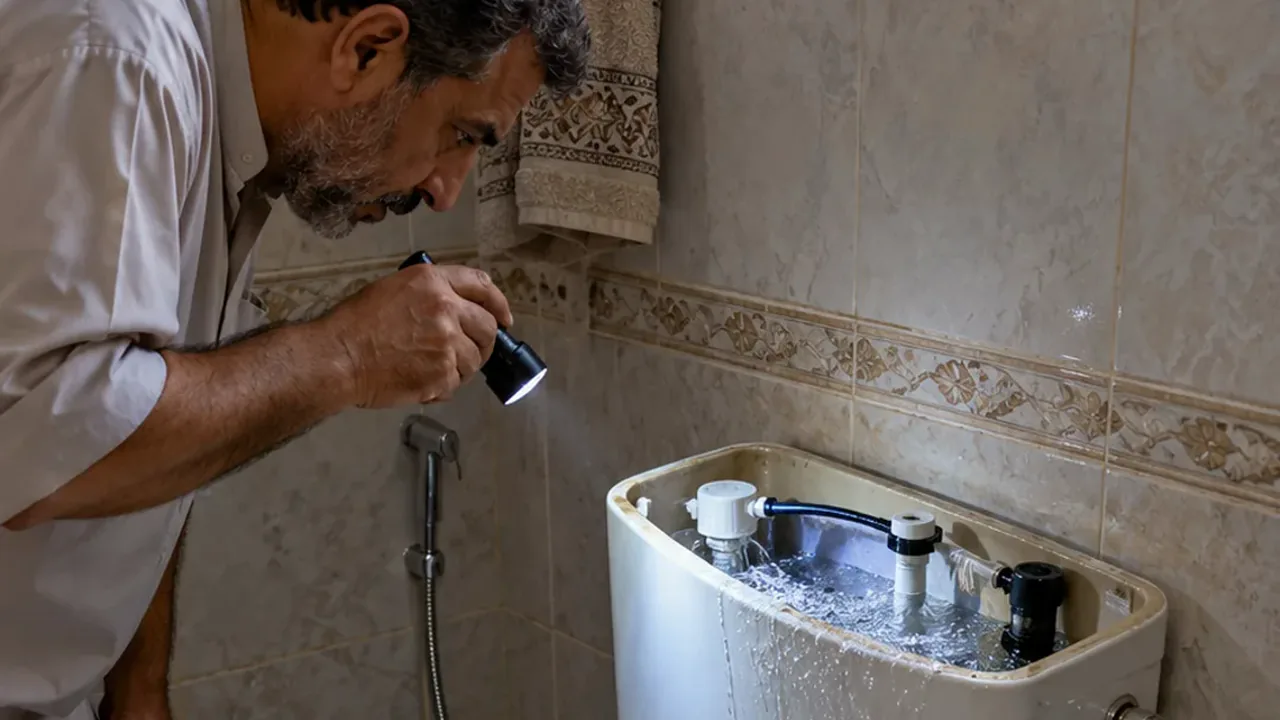
A toilet tank (or cistern) has two parts that matter: the float, on the fill valve, lets water in and shuts it off at the right level, and the flapper, the rubber seal at the bottom, holds the water until you flush.
- Find the shut-off valve and lift the lidThe shut-off valve is the small tap on the wall below the tank, and it cuts the water to the toilet only. Test it before you do anything else. Lift the tank lid off and put it down on a towel on the floor, because ceramic breaks easily. If your tank is built into the wall, don't force the flush plate off.
- Do the dye testWith the tank full, add a few drops of food coloring or some strong tea, and don't flush for 20 minutes. If color appears in the bowl, the flapper isn't sealing and water is slowly seeping past it.
- Check the water level and the overflow tubeIn the middle of the tank there's an open tube that takes the overflow. If the water reaches its rim and spills into it, the float is set too high. The level should stop 2 to 3 cm below the rim, and many tanks have a line marked inside.
If water keeps running into the bowl
- Lower the floatPlastic floats have a screw or a clip on the shaft. Lower it a little, flush, and see where the level stops. Repeat until it settles below the rim of the overflow tube.
- Clean the flapper and its seatClose the shut-off valve and flush to empty the tank. A single grain of sand under the flapper is enough to cause a leak. Wipe the flapper and the ring it sits on with a cloth. If it's stiff, cracked or warped, take it to a hardware store and buy one the same size.
- Check the button and the linkagePress the button and let go: it should spring all the way back. If it stays down, or the cable or chain is too tight, the valve stays slightly open and the water keeps running. Loosen it until the button moves freely.
If the tank won't refill, or refills slowly
- Open the shut-off valve fullySometimes someone half closes it while cleaning and forgets. Open it all the way, but don't force it if it's rusty and stiff.
- Check the water in the rest of the houseAre the other taps on that floor weak too? Then the toilet isn't the problem: the roof tank is empty, its float is stuck, or the pump isn't pushing water up. Check the roof tank first.
- Clean the fill valve inletClose the shut-off valve, undo the hose at the tank end by hand, and keep a bucket underneath. Most types have a small mesh screen at the inlet that clogs with sand and limescale. Rinse it, refit the hose and tighten it by hand.
Water on the floor?
Dry the whole floor, put a dry tissue anywhere you suspect a leak, and come back in an hour. The wet tissue shows you the source.
- At the hose or the shut-off valve: usually a loose nut. Tighten it a quarter turn by hand, and don't put a wrench on plastic nuts. If the hose is rusty or bulging, replace it.
- Between the tank and the bowl: water is getting past the bolts or the rubber gasket between them. Fixing it means draining and removing the tank, so leave it to a plumber.
- From the base of the toilet: the seal between the toilet and the drain has failed (a sewage smell is the giveaway), and the fix means lifting the toilet.
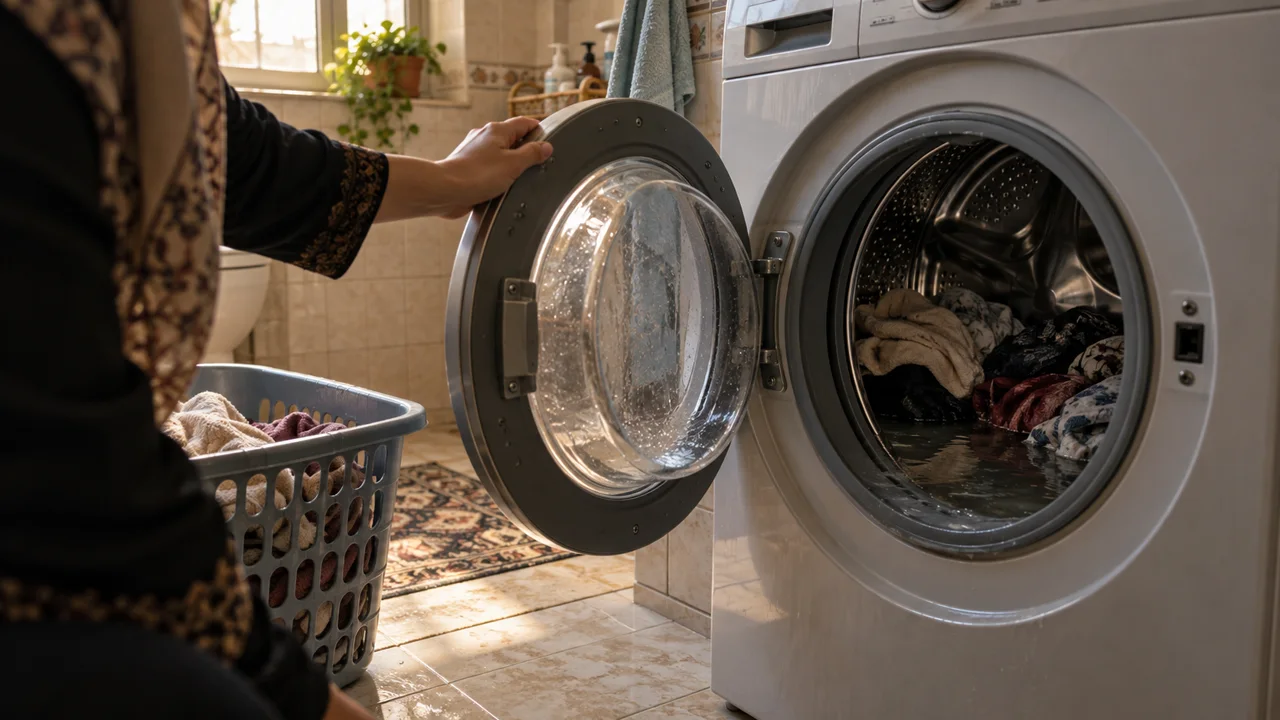
Has the water reached a socket or the water heater? Read our home electrical safety guide (Arabic) before anything else. And if the washing machine in the same bathroom won't drain, see washing machine not draining or spinning.
Warning: If water has spread across the bathroom and reached a socket, the water heater or the washing machine, switch off the breaker at the panel before you walk on the wet floor. Before you undo a hose or touch the float, close the shut-off valve and make sure the water has actually stopped.
Signs it's time to call a plumber
- Water or a sewage smell at the base of the toilet. The seal under the toilet has failed, and the fix means lifting the toilet and setting it again.
- A crack in the tank or the bowl. Cracked ceramic can split without warning and flood the bathroom.
- The shut-off valve itself leaks or won't close. If you force it and it breaks inside the wall, you'll have to shut off the water to the whole house and break tiles.
- Damp or seepage on the wall next to it. A pipe is leaking inside the wall, which needs tracing and some careful breaking out.
- A built-in tank you can't open. Opening it the wrong way breaks the flush plate, and a plumber knows how each type comes apart.
Would you rather leave it to a professional? Book through the Khadamaty app: tap «سباكة وصحيات» (plumbing), describe the problem with a photo and pick a time. A plumber comes to your door in Baghdad, Karbala, Najaf or Babel, and the price is confirmed with you before work starts. The app is in Arabic, but booking takes only a few taps.
More about the service: Plumber in Baghdad.
Sources
- Fix a Leak Week: a running toilet can waste hundreds of liters a day (the dye test) · US EPA WaterSense
- Residential Toilets: how the flush valve and fill valve work · US EPA WaterSense
- How to Fix a Running Toilet: test, check and repair · Family Handyman
- Toilet Troubleshooting · iFixit
Questions about a running toilet
Why does my toilet tank refill every so often when no one has used it?
The flapper at the bottom is leaking slowly, so the tank empties bit by bit and the float tops it up. A dye test confirms it.
Do chlorine tablets in the tank damage it?
They can. Over time they harden the flapper and the other rubber parts, so leaks start sooner. Clean the bowl directly instead.
Can I replace the toilet's supply hose myself?
Yes, if the shut-off valve closes properly. Close it, remove the old hose, take it to a hardware store to match the length and fitting, and tighten the new one by hand.
The tank fills but the flush is weak. Why?
The water level is too low because the float is set too far down, or the button isn't opening the valve fully. Raise the float a little and check how the button moves.